Health and Safety Policy for Landscaping Woolwich
 This health and safety policy sets out how our landscaping Woolwich work is planned, managed, and carried out to protect employees, clients, visitors, and the public. Our aim is to deliver safe, efficient, and high-quality outdoor work while keeping risks as low as reasonably practicable. We recognise that landscaping tasks can involve machinery, manual handling, sharp tools, changing weather, uneven ground, and exposure to moving vehicles, so safety is built into every stage of the job.
Our Commitment
We are committed to maintaining a safe working environment through proper training, sensible supervision, and clear communication. Every member of the team is expected to take responsibility for their own safety and the safety of others. This includes using equipment correctly, reporting hazards promptly, and following site rules at all times. The landscaping health and safety policy applies to all routine and non-routine tasks, from garden maintenance to larger outdoor improvements.
Key Principles
Safety begins before work starts. We assess each job for potential hazards, select suitable methods, and ensure the correct tools and personal protective equipment are available. When conditions change, such as wet surfaces, poor light, high winds, or restricted access, we review the work plan and adjust accordingly. 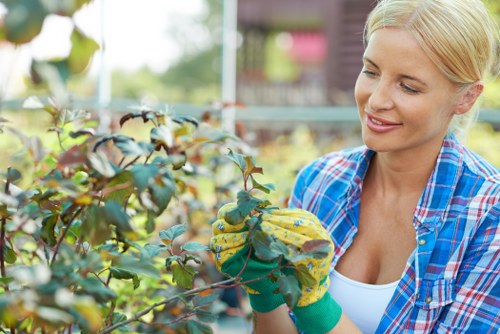 Good housekeeping is also essential: tools must be stored safely, waste removed regularly, and access routes kept clear to reduce slips, trips, and falls.
Risk Assessment and Planning
Before any landscaping project begins, a suitable and sufficient risk assessment is completed. This helps identify hazards such as underground services, unstable ground, lifting strains, powered machinery, noise, dust, and contact with plants or materials that may irritate the skin. Controls may include safer work methods, barriers, warning signs, spotters, or temporary exclusion zones. For the Woolwich landscaping team, careful planning ensures each task is carried out safely and in the correct sequence.
Training and Competence
Only trained and competent personnel may operate specialist tools and machinery. Training covers safe handling, machine checks, correct lifting techniques, emergency procedures, and the use of protective equipment. Refresher instruction is provided where needed, especially when new equipment or working methods are introduced. Supervisors monitor work standards and intervene when unsafe behaviour is observed. We believe that a strong health and safety culture depends on knowledge, consistency, and accountability.
 The use of personal protective equipment is mandatory where risks cannot be fully controlled by other means. Depending on the task, this may include gloves, safety footwear, eye protection, hearing protection, high-visibility clothing, or waterproof layers. PPE is inspected before use and replaced when damaged or worn. It must be worn correctly and kept in good condition. PPE does not replace safe working practices; it supports them.
Equipment, Machinery, and Maintenance
All tools and machinery are selected for suitability and maintained in safe working order. Pre-use checks are carried out on equipment such as mowers, trimmers, cutters, and small plant to confirm guards, controls, cables, and fuel systems are secure. Defective items are removed from service immediately. Refuelling, cleaning, and storage are done in a controlled manner to reduce fire and contamination risks. Our landscaping safety policy also requires that equipment is only used on surfaces and in environments for which it is appropriate.
Manual Handling and Physical Work
Landscaping often involves lifting, carrying, pushing, pulling, and repetitive movement. These activities can place strain on muscles and joints if not managed properly. We reduce manual handling risks by using mechanical aids where possible, dividing heavy loads into smaller ones, and encouraging team lifts for awkward items. Workers are instructed to adopt stable postures, avoid twisting, and pause when fatigue is affecting performance. Regular breaks and sensible task rotation help maintain safe levels of physical effort.
Working Conditions and Public Protection
Outdoor work can expose staff to heat, cold, rain, mud, sun, and low visibility. We plan for weather-related risks by scheduling tasks appropriately and providing suitable clothing and hydration where required.  Where work takes place near members of the public, boundaries are marked clearly and any moving equipment is operated with extra caution. We aim to protect pedestrians, residents, and property by keeping the work area tidy and controlled.
Incident Reporting and Emergency Response
All accidents, near misses, injuries, property damage, and unsafe conditions must be reported as soon as possible. Prompt reporting allows us to investigate root causes and prevent recurrence. First aid arrangements are considered before each job, and emergency procedures are communicated to the team at the start of work. If an incident occurs, work may be stopped until the area is safe and the cause has been addressed.
Substances, Waste, and Environmental Care
Where fertilisers, fuels, or cleaning agents are used, they must be stored and handled carefully in accordance with manufacturer instructions. Spill risks are minimised through secure containers and correct disposal methods. Waste material, including green waste and packaging, is separated and removed responsibly. Environmental care supports safety by reducing clutter, improving visibility, and preventing hazards from building up on site.
 This policy is reviewed regularly to ensure it remains effective and aligned with our working practices. Updates are made when new equipment is introduced, when incidents highlight an improvement, or when operational needs change. Everyone involved in landscaping in Woolwich is expected to support these standards and work in a way that prioritises safety, quality, and respect for others. By following this policy, we maintain a professional service while protecting people, property, and the environment.